
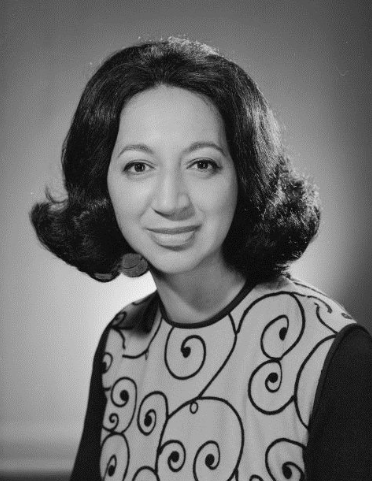
Whetu Tirikatene-Sullivan
(1932 – 2011)
Whetū Tirikātene-Sullivan was born on 9 January 1932 at Rātana Pā — the same year her father took his seat in Parliament as the Rātana MP for Southern Māori. She is of Ngāi Tahu and Ngāti Kahungunu descent. By the time her political career ended in 1996, she and her father had held that seat for 64 consecutive years.
She did not plan to enter politics. Her studies ended abruptly in 1967 when her father died and she was called home to replace him. She won the by-election convincingly. At 35 she was the youngest woman ever elected to New Zealand's Parliament at that time.
She made history again in 1972 when Norman Kirk's Labour government swore her in as Minister of Tourism — the first wāhine Māori Cabinet Minister in Aotearoa's history. She was the only woman in both the Kirk and Rowling cabinets, holding the Tourism and Environment portfolios and serving as Associate Minister of Social Welfare.
When her daughter was born in 1970, Whetū became the first MP to give birth while Parliament was in session. She returned to work within weeks, caring for her daughter in her office — something considered extraordinary at the time. Her son Tirikātene, born in 1974, is thought to have been the first child born to a Cabinet Minister anywhere in the British Commonwealth.
Her policy legacy runs deep — the Waitangi Tribunal, Marae and Papakāinga Housing, Māori news on radio and television, the protection of Māori fishing grounds, the tangata whenua vote, and pioneering preventative health education for Māori. These were not side projects. They were the foundation stones of what came after.
And then there was her style — deliberate, political, transformative. She commissioned garments from contemporary Māori artists including Sandy Adsett, Para Matchitt, Cliff Whiting, and Frank Davis. The Māori motifs woven into her clothing were unique for the time, exposing New Zealanders to a new expression of Māori art through the body of the woman standing in front of them. She understood that how she dressed was itself a statement. She made it one.
Her career ended bitterly in 1996 when she was defeated by a New Zealand First candidate after Sir Tipene O'Regan publicly accused her of being an enemy of her own people. She believed those accusations came from her insistence on full accountability of the Ngāi Tahu Trust Board that O'Regan chaired. It was a painful ending to a remarkable career — a reminder that being a pioneer does not protect you from political enemies, even those within your own whakapapa.
She was appointed a Member of the Order of New Zealand in 1993 — the country's highest honour. She died in Wellington on 20 July 2011.
Whetū Tirikātene-Sullivan spent nearly three decades navigating rooms of power as the only Māori woman in them — balancing Labour party loyalty, iwi interests, and her Rātana faith, while building structures that wāhine Māori still walk through today. She was not just a trailblazer. She was an architect.