
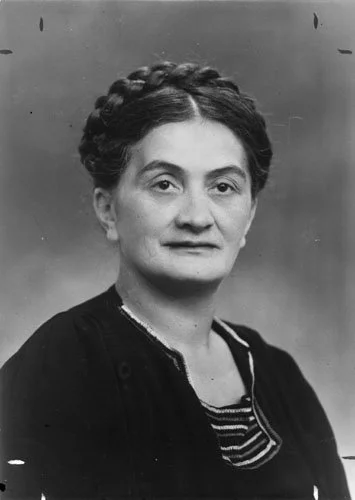
Iriaka Rātana
(1905 – 1981)
Iriaka Rātana was born Iriaka Te Rio in 1905 at Hiruhārama on the Whanganui River, with connections to Te Āti Haunui-a-Pāpārangi through both parents. She grew up alongside the river, became a talented singer, and at sixteen made her way to Rātana Pā — joining the cultural groups that accompanied the prophet Tahupōtiki Wiremu Rātana on his tours around the country. In 1925 she became his second wife. After his death in 1939, she married Matiu, his son by his first marriage. She moved from wife to daughter-in-law to wife again within the same whakapapa. Her life, from the beginning, did not follow ordinary lines.
When Matiu Rātana died on 7 October 1949 following a car accident in Whanganui, Iriaka did not simply step into his seat. She seized it. When the Labour Party put forward a non-Rātana candidate, she threatened to stand as a Rātana Independent. Labour backed down. She won the Western Māori seat by a wide margin and became the first wāhine Māori MP in Aotearoa's history. She was 44 years old.
The resistance she faced was real and came from within her own world. Tainui leader Te Puea Hērangi had earlier declined to stand for Parliament herself on the grounds that no woman should captain the Tainui waka. Iriaka's National opponent argued that placing a woman in what he called a man's seat would break with Tainui protocol. She won anyway. And she held that seat for twenty years.
In Parliament she was an unusual presence — described as unsophisticated yet eloquent, gentle and invariably polite. She listened carefully and spoke with care. The result was that both sides of the House listened to her with genuine respect, something few MPs across any era can claim. She never performed outrage. She painted pictures instead — of elderly Māori without housing, of rangatahi without training, of rural communities arriving in cities with nothing to hold onto. Her focus was relentlessly practical and relentlessly human. She wanted things to actually change for people.
She retired in 1969 and died in 1981, survived by nine children and many grandchildren.
She entered Parliament through grief and succession — as did the woman who followed her. But both women outgrew that origin entirely. Iriaka's threat to run independently against Labour's preferred candidate in 1949 is not the act of a widow being ushered into a seat. It is the act of someone who knew exactly what she carried and was not prepared to be told otherwise.
Did you know?
Iriaka Rātana was the first wāhine Māori MP, entering Parliament in 1949. Whetū Tirikātene-Sullivan was the second, entering in 1967 while Iriaka was still serving — making them contemporaries for two years. In 2016, both women's portraits were raised together in the New Zealand Parliament Buildings at Mātangireia in a special ceremony honouring them both. One broke the door open. The other walked through and kept building. Together they hold the first chapter of wāhine Māori political leadership in this country.