
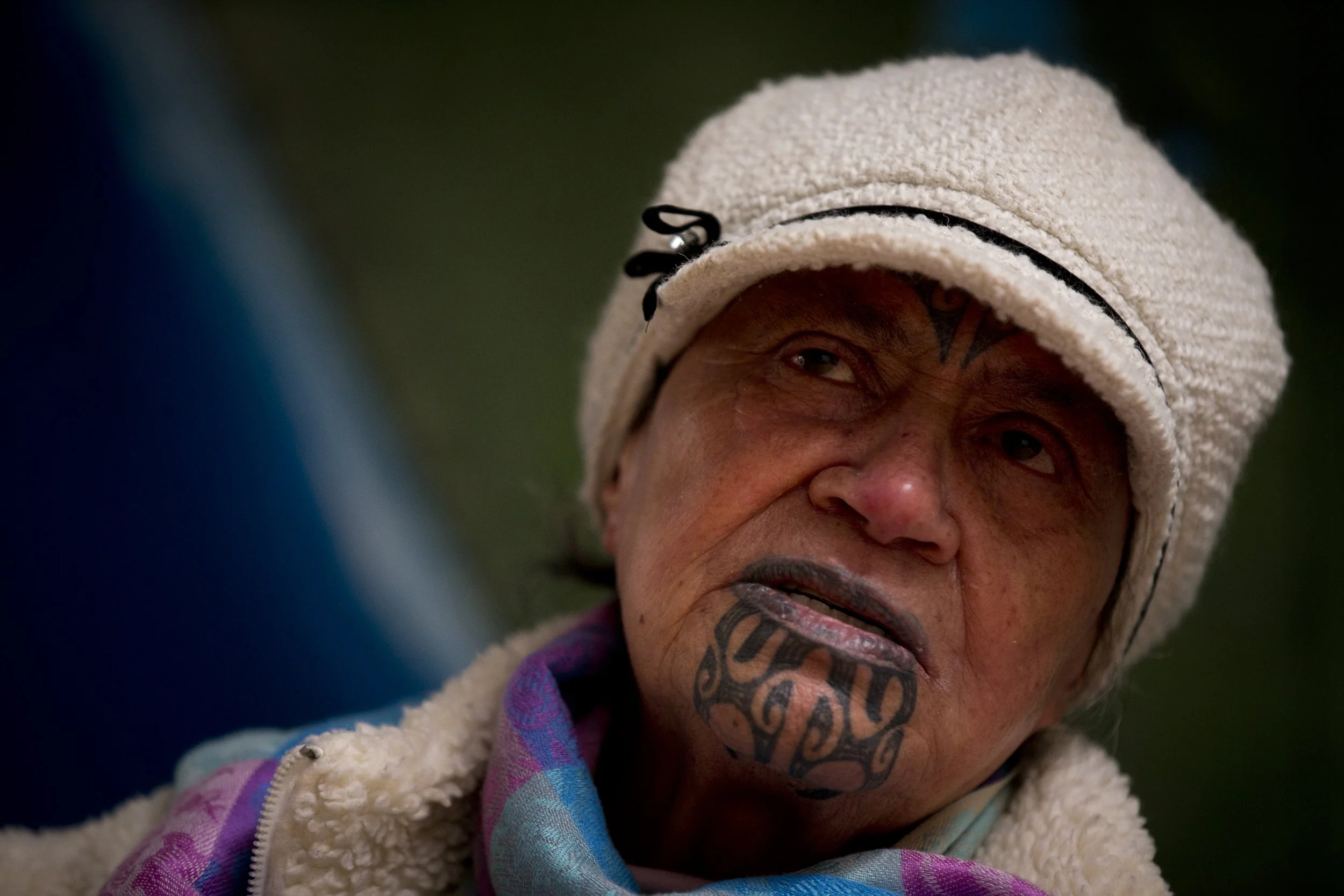
Dame Nganeko Minhinnick
(1939 – 2017)
Dame Ngāneko Kaihau Minhinnick was born of Ngāti Te Ata descent and grew up in Waiuku. From an early age her people saw something in her and chose her as a future leader. She was attending Māori Land Court hearings from the age of eleven — a child in a room of adults, learning the machinery of a system that had been designed to work against her people, understanding it from the inside so she could one day use that understanding against it.
She spent decades doing exactly that.
In 1985 she led a landmark claim to the Waitangi Tribunal over the pollution of the Manukau Harbour — one of the most significant environmental claims ever brought before the Tribunal. The Manukau was not just a waterway. It was whakapapa. It was food, it was identity, it was the living connection between her people and the land they had always been kaitiaki of. The Tribunal's report, together with her subsequent submissions to government, laid the groundwork for what became the Resource Management Act 1991 — legislation that fundamentally reshaped how Aotearoa New Zealand manages its natural environment. That is not a footnote. That is a law that governs the land and water of this country, and her voice is in its foundation.
She did not stop at Aotearoa's borders. She took her people's cause to the world stage — presenting at United Nations forums on indigenous rights, placing the experiences of Ngāti Te Ata and the principles of Māori environmental guardianship into international conversations about what it means to protect the relationship between indigenous peoples and the natural world.
She was made a Dame in 2013 for her services to Māori and conservation.
Dame Ngāneko Minhinnick was chosen at eleven years old and she spent a lifetime honouring that. She walked into courtrooms, into Tribunal hearings, into government offices, and onto the world stage — always carrying the same kaupapa. That the water, the land, and the people who have always cared for them are not separate things. And that no law, no development, and no government had the right to act as though they were.