
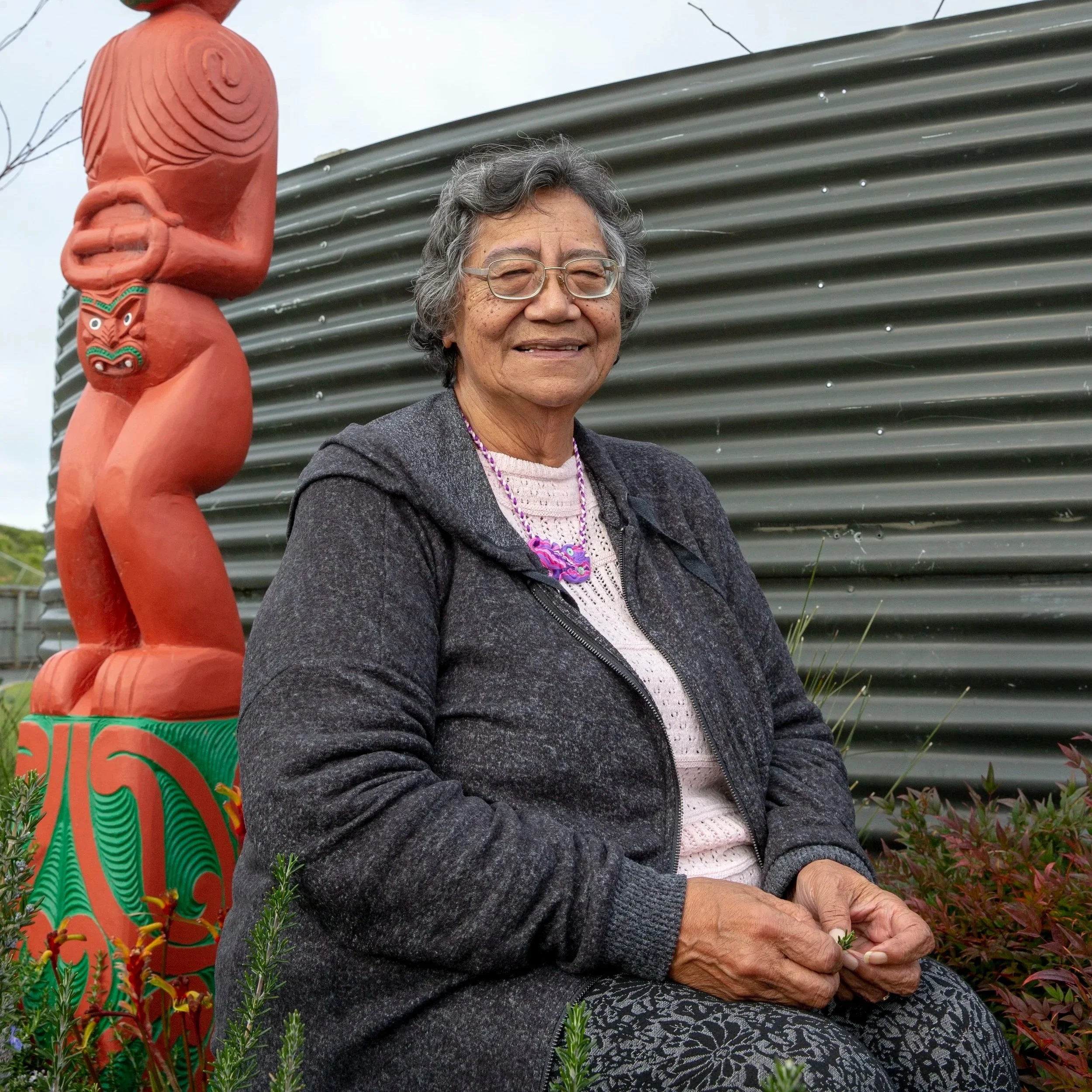
Ngaire Kelly
(1946 - 2024)
Ngaire Kelly (Nanny Ngai) was steady, grounded, and unwavering in her dedication towards for her husband, children and mokopuna. This was also true of her mahi alongside our people and wāhine Māori.
She was part of the backbone of Māori social services and Women’s Refuge across the Waikato for almost 5 decades. A foundation member of Tokoroa Women’s Refuge in the 1980s, and for more than ten years the much-loved Nanny at Te Whakaruruhau Refuge in Hamilton, Ngaire’s work was always about protection. Protecting kaupapa Māori approaches. Protecting wāhine and whānau. Protecting the integrity of services designed by Māori, for Māori.
Everything she did was carried with dignity, with whakaaro, and with a deep understanding that leadership is not about ego, it is about responsibility.
In spaces where compliance is often prioritised over community, Ngaire consistently advocated for tikanga-based practice. She understood that Māori wellbeing is relational. It is whakapapa-based. It is long-term and intergenerational. Her leadership reflected that knowing — not as theory, but as lived truth.
There was a warmth in the way she presented to people. A steadiness. An ability to hold complexity without becoming reactive. She listened carefully. She weighed things with intention. And when she spoke, people listened — not because she demanded attention, but because her words carried lived experience, integrity, and aroha.
What made Ngaire’s contribution so significant was not only the roles she held, but the way she held them. She belonged to a generation of Māori women who strengthened the foundations of Māori-led services through example, through quiet resolve, and through true tenacity.
Loved deeply by her whānau. Respected by her peers. Missed by all.
And at Te Whakaruruhau, her presence remains — in the way we hold wāhine, in the standards we refuse to lower, and in the quiet expectation that we lead with both courage and care. That is part of her legacy.
He manawa aroha tō Ngāire, he kāinga mō te hunga e mamae ana; ahakoa kua whetūrangitia, e mahana tonu ana tōna korowai i a mātou.”